Healthcare Insurance Visibility: Perplexity Outperforms Google AIO by 25% in AI Search
Healthcare Insurance Visibility: Perplexity Outperforms Google AIO by 25% in AI Search
Takeaways:
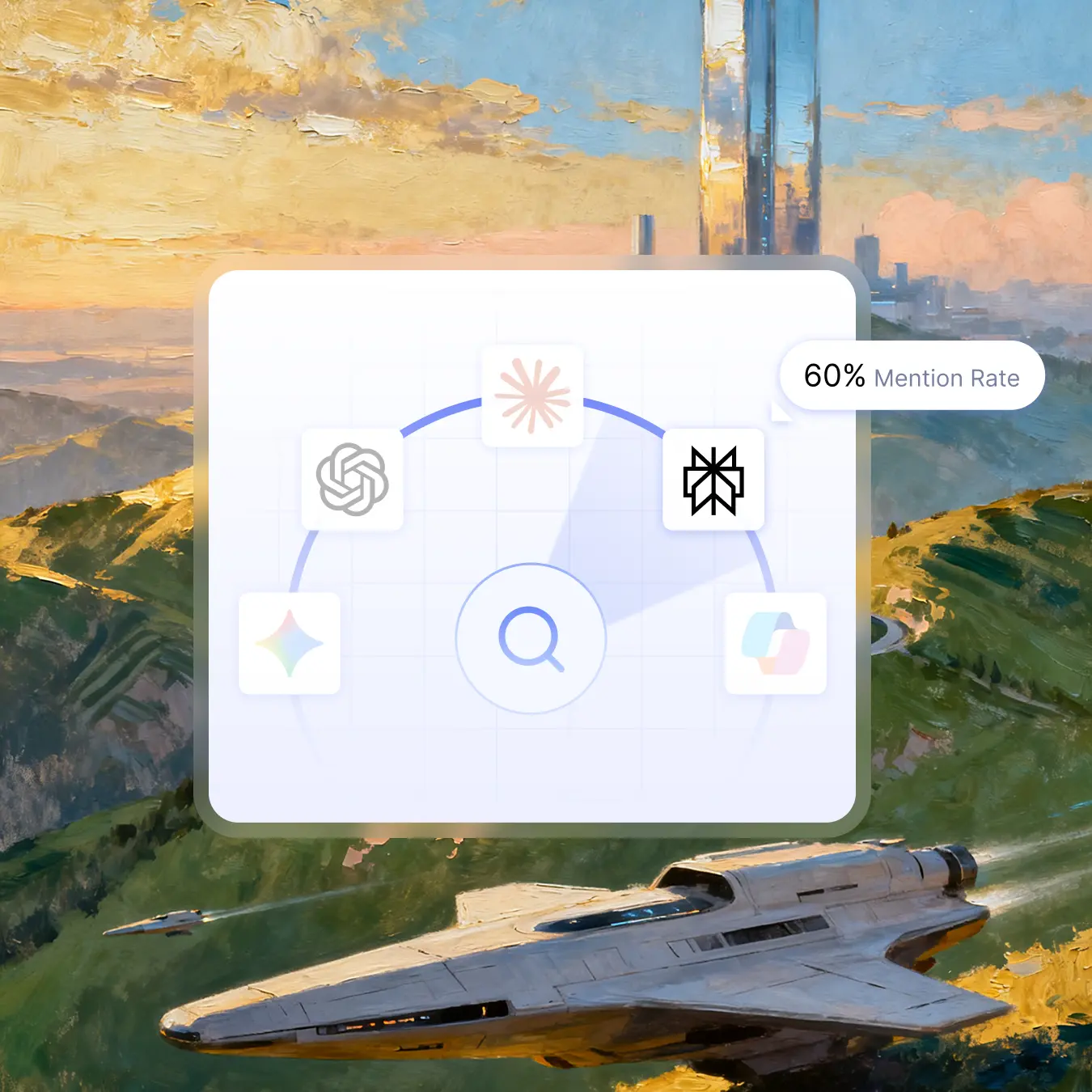
- Perplexity Leads: With a 60% brand mention rate, Perplexity is the dominant visibility driver for healthcare insurance. That means 6 out of 10 queries get a named brand in the answer.
- The Rise of AI-Native: "AI-native" search engines like Perplexity and ChatGPT are outperforming traditional incumbents in non-branded query visibility.
- Platform Divergence: Aetna dominates Customer Support queries on Perplexity, while UnitedHealthcare leads the same queries on Google AIO.
- Competitive Landscape: ChatGPT offers the most balanced visibility among the top 5 providers.
The AI Search Flip: Why Being Number One on Google Isn’t Enough Anymore
For decades, the healthcare marketing playbook was simple: rank for keywords on Google. But in 2026, the "Agentic Web" has arrived, and the rules have shifted. Our latest Brandlight data reveals a sharp trend: Perplexity is now leading healthcare visibility across AI engines, with a 60% brand mention rate across 4,000 analyzed queries. That means in 6 out of 10 queries, Perplexity's answer named at least one specific brand. The remaining 40% returned generic answers with no brand mentioned at all. On Google AIO, that same rate drops to 35%. While Google remains the volume leader for traditional search, its AI Overviews (AIO) lag behind the newer "answer engines" when it comes to surfacing specific brand names in front of the customer.

Deep Dive: The Battle for Healthcare Insurance Share of Voice
In our comprehensive 2026 study of healthcare insurance queries, covering over 21 categories including claims, cost, and comparisons, we found that the visibility landscape is no longer a monolith.
The brand mention rates across the top five AI engines tell a story of rapid disruption:
- Perplexity: 60% visibility
- ChatGPT: 54% visibility
- Copilot: 46% visibility
- Google AIO: 35% visibility
Despite having a smaller global market share than Google, AI-native engines are taking real bites out of Google's search dominance. Our Q4 data highlights this volatility: Perplexity increased visibility by 15%, while Microsoft's Copilot saw a 1% drop.
This suggests that AI-native engines are more "beneficial" at surfacing brand names for non-branded queries (e.g., "best insurance for heart surgery claims") compared to traditional search architectures trying to retro-fit AI.
The Strategy Gap
On Customer Service and Support queries, the same prompt produces different winners depending on the engine:
- On Perplexity: Aetna dominates competitors across hundreds of prompts.

- On Google AIO: UnitedHealthcare (UHC) takes the lead on the exact same queries.

- On ChatGPT: It’s a much more balanced representation across the competitive set.
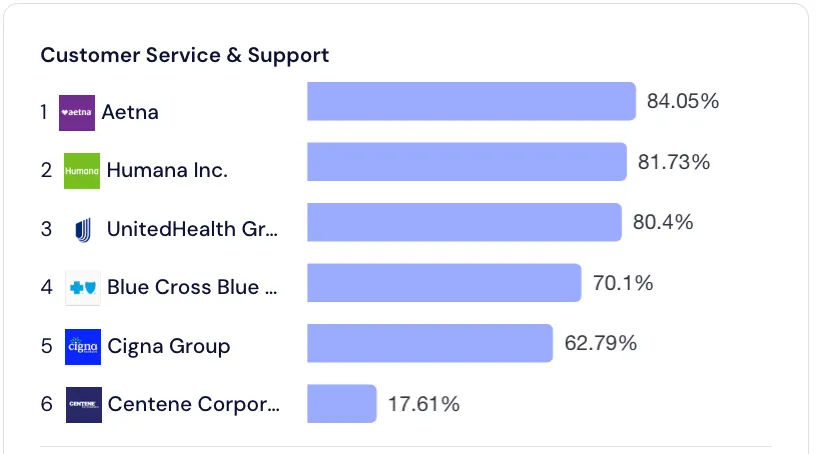
The gap comes down to where each engine draws its knowledge. Google AIO leans heavily on its existing index of authoritative domains, while Perplexity's "answer engine" logic prioritizes different citation sources. ChatGPT is more balanced in its market representation. For marketers, this means you can be winning on one platform and completely invisible on another.
The Brandlight Solution: Mastering the Agentic Web
Snapshots of data aren't enough. Measurement is the first step toward action.
Brandlight provides the visibility platform enterprise businesses need to navigate these shifts. By monitoring thousands of non-branded queries in real-time, we help brands understand:
- Source Citation: Where each engine is pulling its "truth" from.
- Competitive Indexing: Why ChatGPT shows a more balanced landscape while others favor a single leader.
- Optimization Direction: Actionable steps to move from 35% visibility on Google AIO to 60%+ on the engines where buyers are moving.
TL;DR: Key Points Summary
- Perplexity was the most brand-friendly AI engine for healthcare in 2025. 2026 is going to have a lot of change.
- Traditional search visibility does not equal AI visibility.
- Top brands like Aetna and UHC are seeing vastly different results across different LLMs.
- Continuous measurement via Brandlight is required to keep up with Q4+ volatility.